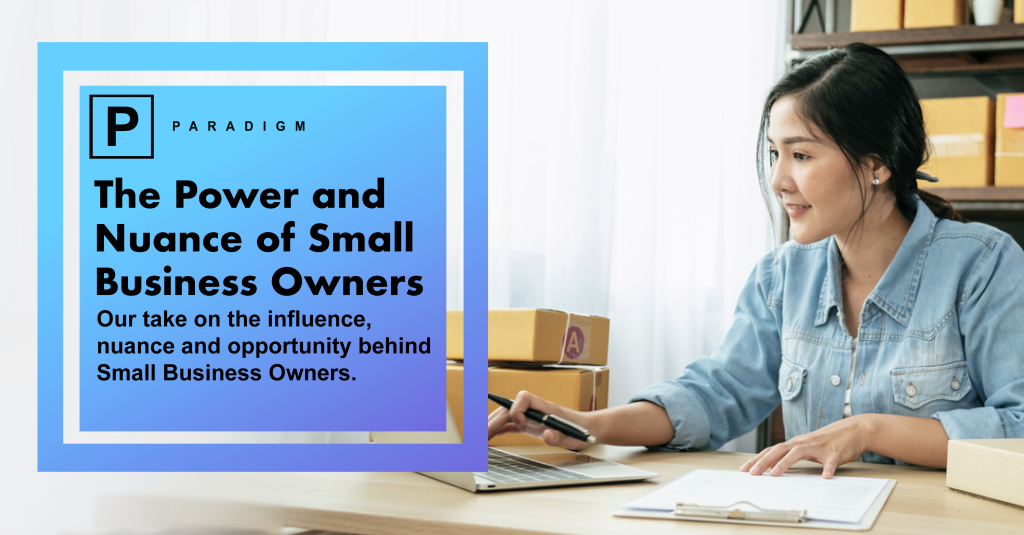
The Power and Nuance of Small Business Owners
Small business owners (SBOs) are not a niche segment of the economy. They are a driving force behind it. Small businesses generate roughly 44% of U.S. GDP, meaning their decisions directly influence local employment, supplier ecosystems, and consumer purchasing power. Today, there are 36.2 million small businesses in the United States, representing 99.9% of all U.S. companies, according to the U.S. Small Business Administration. They employ 62.3 million people , nearly 46% of the private-sector workforce, and were responsible for 88.9% of net new job growth between 2023 and 2024
At the same time, SBOs are navigating significant pressure. In the 2025 Role of Brands Report, top concerns included:

31% retaining talent

30% geopolitical uncertainty

19% acceleration and adoption of artificial intelligence
Emerging technologies and economic shifts are reshaping how small businesses operate. For brands, this creates both complexity and opportunity — particularly in understanding how SBOs evaluate products, partnerships, and long-term investments.
So why are SBOs still so hard to understand?
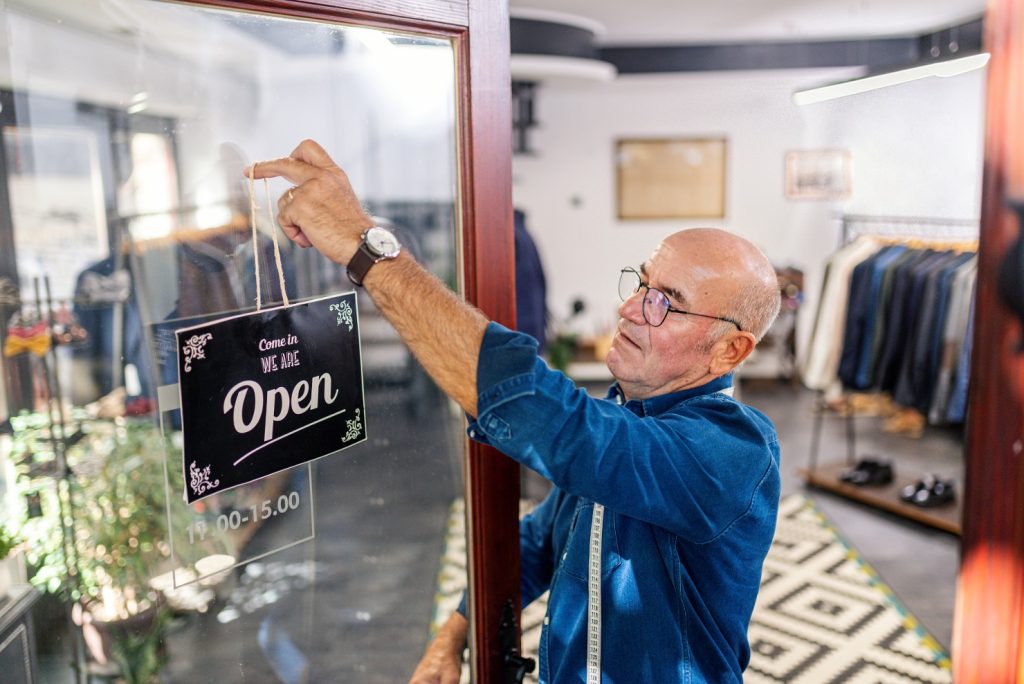
Despite their collective scale, small business owners are anything but uniform. They include everyone from neighborhood coffee shop operators and family-owned manufacturers to tech startup founders and boutique consultants. Some employ just a handful of people, while others oversee teams of fifty or more. Some are entirely self-funded, while others rely on outside investment.
Each faces different constraints, different financial exposure, and different growth ambitions. That variety makes them incredibly valuable to understand, but also extremely difficult to reach accurately in research.
Broad B2B panels or simple filters like “owner” or “CEO” rarely capture the nuance of true ownership. On paper, many respondents qualify. In practice, they may be employees, contractors, or aspirational founders who don’t carry operational and financial responsibility. The result? Noise in the data and diluted insights.
Our Take
At Paradigm, we treat small business owner recruitment as a data quality challenge first. Authentic insights come from real owners making real decisions, not proxies or adjacent roles. Our approach combines intentional, network-driven recruitment with human and automated screening to validate ownership, decision authority, and real-world context. We prioritize ongoing engagement, building a community of verified owners who provide consistent, thoughtful insights over time.
By prioritizing authenticity over scale, Paradigm ensures research reflects the diverse realities of small business ownership: from solo founders managing every function to established firms balancing growth and operations.

Three Tips for Recruiting Small Business Owner That Deliver Real Insights

1. Verify ownership, don’t assume it.
Go beyond titles and self-reported roles. Confirm respondents actively run the business and make operational and financial decisions.
2. Screen for real-world context.
Business size, growth stage, and daily pressures matter as much as credentials. Context drives meaningful insight.

3. Blend human review with technology.
Automated checks reduce fraud, but human validation identifies nuance. Together, they ensure your panel truly represents owners’ perspectives.
The Bottom Line
Small business owners aren’t a single segment. They are millions of distinct economic actors with outsized influence. By prioritizing a human-in-the-loop approach to authenticity and verification, research becomes more inclusive of SBOs and thus paints a clearer picture of how to engage this highly influential group.